Illinois Leaders Gather to Celebrate Governor’s Signage of The Civil Rights Safeguard Act
August 13th, 2026
CONTACT:
Racquel C. Fullman
Women Employed
312-319-2541
Illinois Leaders Gather to Celebrate Governor’s Signage of The Civil Rights Safeguard Act
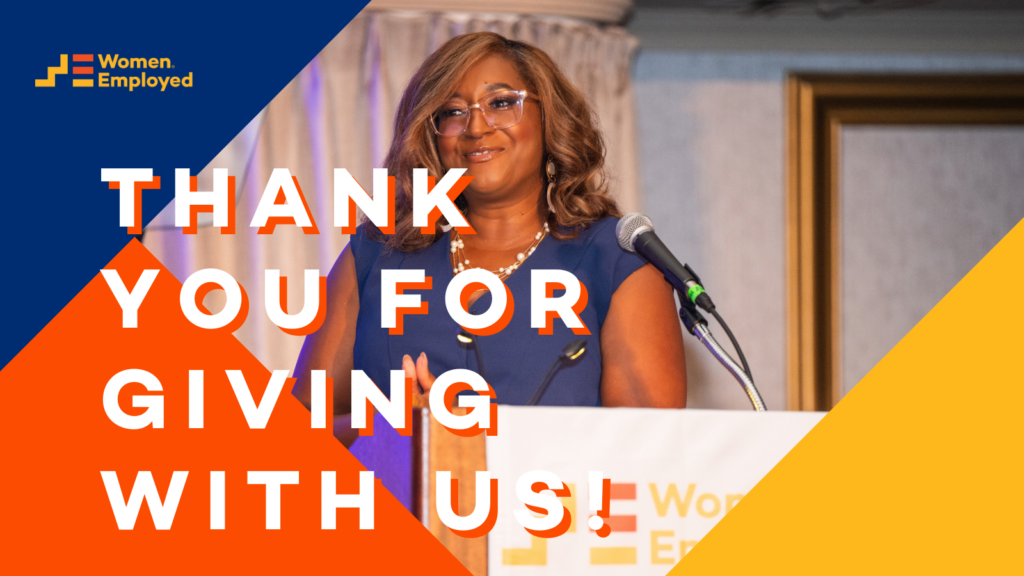
CHICAGO—Yesterday, Women Employed hosted Illinois leaders from government, industry, and the community to celebrate Governor JB Pritzker’s signing of Senate Bill 3777, the Civil Rights Safeguard Act. During a time when the federal administration has been undermining national civil rights protections, Illinois continues to be a champion for equity and justice.
On April 23, 2025, the President issued an executive order entitled, “Restoring Equality of Opportunity and Meritocracy,” and specifically directed the U.S. Equal Employment Opportunity Commission (EEOC) to stop filing disparate impact cases. This move upends a cornerstone of civil rights law, established 55 years ago in 1971, when the U.S. Supreme Court recognized that discrimination could result not only from intentional bias, but also from policies that appear neutral on their face, but policies that produce unjustified, disproportionate barriers for protected groups. It also sends a signal that equal opportunity is no longer a priority at the federal level.
Illinois has now taken action. Thanks to bill sponsors State Senator Adriane Johnson (D-Buffalo Grove) and State Representative Justin Slaughter (D-Orland Park), and support from civil rights advocates, community organizations, and stakeholders across Illinois, that cornerstone of civil rights protections will remain.
A few examples of who this legislation preserves protections for include:
- Women who face barriers to opportunity on the job
- Students with disabilities who face inequitable school policies
- Survivors of domestic and sexual violence who are disproportionately female
- LGBTQ+ persons who face sex discrimination
- Black and Brown homeowners and consumers who face barriers from redlining
- Immigrants and naturalized citizens who face barriers to language access
- Disabled veterans who face housing voucher-based discrimination
“We believe all women—and all people—deserve full and fair economic opportunities. When barriers to employment, education, financial credit, and housing are removed, more Illinoisans can succeed, support their families, and contribute to thriving communities,” said Cherita Ellens, President and CEO of Women Employed. “We are proud of Illinois’ leadership, and hope this legislation will be a roadmap for other states and a reminder that preserving disparate impact protections is important not just for civil rights but for economic opportunity.”
“Every civil rights protection begins with a person, someone trying to earn a living, provide for their family, find a home, pursue an education, or simply be treated fairly,” said Illinois Department of Human Rights Director James Bennett. “Illinois has made a deliberate choice to ensure those protections remain strong and enduring. We want every Illinoisan to know that their dignity matters, their rights matter, and those principles remain fundamental to who we are as state.”
“Illinois has a long history of being a leader when it comes to the fight for civil rights,” said State Senator, Adriane Johnson (D-Buffalo Grove). “It is crucial now more than ever to ensure that those protections remain strong, clear, and enforceable, regardless of shifting federal priorities. Today, we live up to that legacy and continue on the long, long march to true equality.”
As chair of the House Black Caucus, I was very proud of everyone involved in this work,” said State Representative, Justin Slaughter (D-Orland Park). “These policy changes were necessary because they correct unfair systemic barriers and now Illinois will be able to hold organizations accountable but also prevent and address exclusion.”
“In the context of education, an issue of great priority for the Latino Policy Forum, is that students who have historically come from underserved communities, such as English language learners, immigrant students, or students of color could, in effect, be denied access to meaningful educational resources and supports without any remedy,” said Juan-Carlos Bautista, Latino Policy Forum Associate Director of Government Relations and External Affairs. “This law [SB 3777] ensures that a student, no matter their background, can receive a fair and equal education.”
“Today we celebrate history,” said Adam Slade, Director of State Fiscal Policy and Governance at Illinois Black Advocacy Initiative. “I feel connected to all the advocates of the past that fought for our civil rights back in the 1960s all the way up to today with this great coalition that we have here today. With the passage of the Civil Rights Safeguard Act, our state has done what Washington has refused to do. Illinois has stood up and said clearly and without hesitation that discrimination, intentional or not, has no place in Illinois.”
“Illinois ensures that families do not lose protection against discriminatory credit practices simply because Washington has decided to run away from words they are scared of, and I’m so thankful,” said Myanno Miller, Advocacy Associate at Woodstock Institute. “Illinoisans, and I mean every Illinoisan, deserves a fair shot at a line of credit judged on their ability to repay, not barriers baked into policies that weren’t designed with them in mind. The Civil Rights Safeguard Act keeps that promise alive in Illinois.”
“Right now, the federal government is sending conflicting and changing signals about civil rights enforcement,” said Gail Schnitzer Eisenberg, President of the National Employment Lawyers Association of Illinois. “SB 3777 makes it clear that Illinois will not leave workers, employers, or judges guessing about what our state law requires. Illinois law will be interpreted according to Illinois values, Illinois constitutional guarantees, and not according to the changing policies of Washington.”
###
About:
Since 1973, Women Employed (WE) has been opening doors, breaking barriers, and expanding opportunities for women. Our mission is to increase the economic status of women and remove barriers to economic equity, and we do that by shaping policy change, expanding access to educational opportunities, and advocating for fair and inclusive workplaces so that all women, families, and communities can thrive. For more information about Women Employed, visit https://womenemployed.org, or follow Women Employed on Facebook, LinkedIn, Instagram, Threads, or BlueSky.