Student Debt Resources
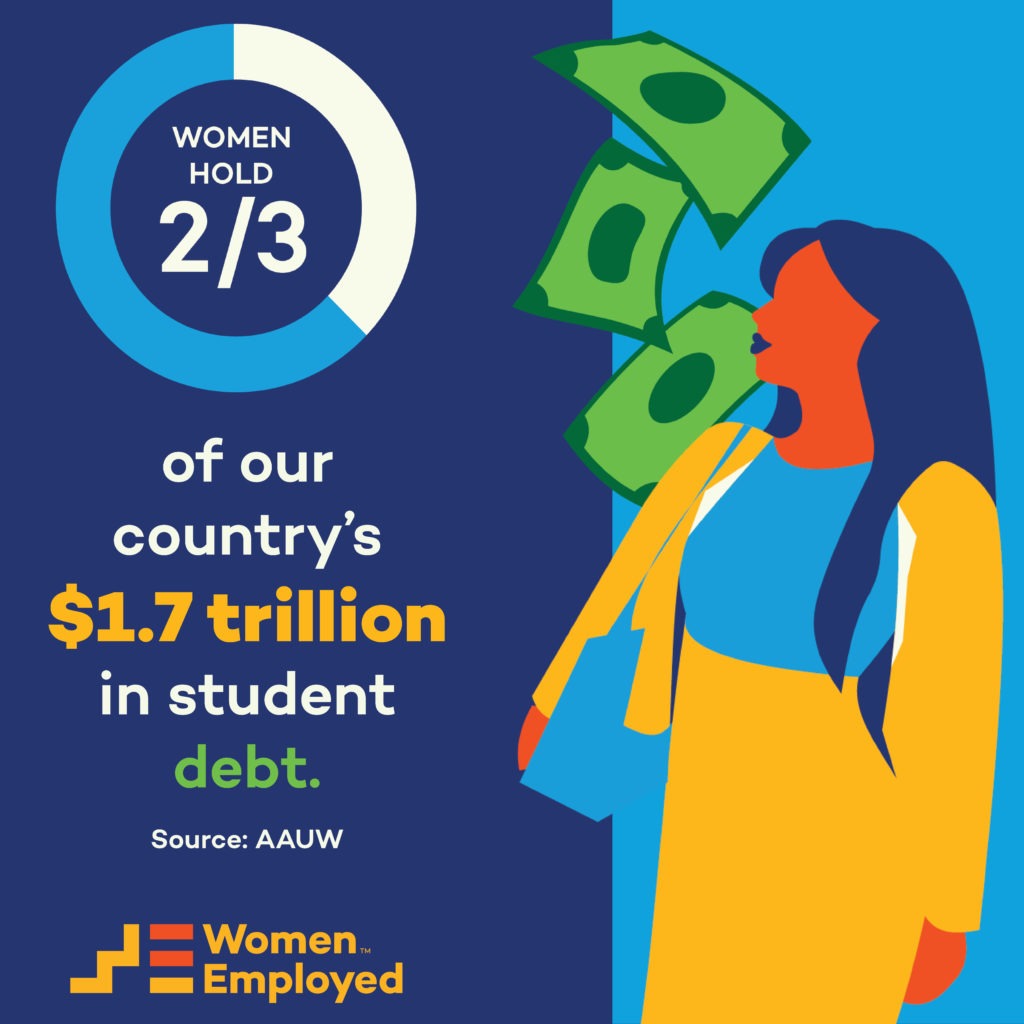
Student loan debt is a national problem. Outstanding debt keeps borrowers from saving for retirement, buying property, and building wealth. Nationally, women carry two-thirds of our nation’s $1.7 trillion in student debt. Black women hold more student debt than any other group—with an average of $38,800 in federal undergraduate loans one year after completing a bachelor’s degree, 22 percent more than white women.
With student loan and debt policies and programs shifting often, it can be challenging to know where to find what you need. Below you’ll find resources with up-to-date information for student borrowers—nationally and in Illinois.
Information on the Student Loan Landscape
Updated July 2026
While the student loan landscape continues to be chaotic, and some proposed changes are held up in the courts, there are a LOT of changes taking effect in 2026. For example:
- Starting Jan 1, 2026: Income Driven Repayment (IDR) forgiveness will be taxable.
- Starting Jan 7, 2026: The federal government threatened to begin wage garnishment on this date for borrowers in default, but they reversed those plans after public pressure.
- Starting July 1, 2026: Many changes are taking place including changed repayment plans and new borrowing limits. For many, these changes will result in a significant spike in payments.
- The SAVE Plan is ending, and borrowers in this plan have 90 days to pick a new repayment plan.
- New borrowers will lose access to current income-driven repayment plans.
- Parent PLUS borrowers will lose access to all income-driven repayment plans.
- The Graduate PLUS loan program will be eliminated.
- New loan limits will go into effect.
- And more.
- This user-friendly article from NPR has a lot of helpful information on the changes and what they mean for different types of borrowers.
NPR has a good article to get you up to date: Federal student loans are changing. Here’s what to expect in 2026. To stay current on federal student loan information, check out the Student Loan Borrower Resource Center, managed by the Student Debt Crisis, as well as their general resource page, which has a wealth of information, fact sheets, and videos on a variety of student debt topics.

Also, check out this Medium post from August 2025 with some more detailed information about navigating student loan debt programs and policies.
For Federal Student Loan Borrowers
The official Federal Student Aid website run by the U.S. Department of Education is a great starting point for borrowers. The website allows you to manage your loans, learn more about repayment and forgiveness programs, apply for financial aid, and even chat with a virtual assistant to direct you to resources for your particular needs.
You can find additional help from the Student Loan Borrower Resource Center, managed by the Student Debt Crisis, including a help clinic and summaries of specific loan topics.
List of helpful resources from the Public Service Loan Forgiveness (PSLF):
Updated April 2026
- One-Pager on PSLF
- Find the PSLF Help Tool here.
- PSLF Buyback
- If you’re interested in enrolling in an income-driven repayment (IDR) plan, use this tool to identify your estimated monthly payment.
- Another payment estimate tool.
- Student Loan Borrower Assistance.
- If you’re having issues with your account, see if your state has a student loan ombudsman.
For Illinois Student Loan Borrowers
The Illinois Student Assistance Commission has a wealth of resources for borrowers, including information about specific requirements for Illinois grant and loan programs, for different forms of federal loans, and for forgiveness programs. You can also find information about Illinois financial aid programs—including the Monetary Award Program (MAP) and Minority Teachers of Illinois (MTI) scholarship.
The Illinois Attorney General’s Office has information about managing debt and handling complaints against student loan servicers. It also provides information about the Illinois Student Loan Bill of Rights, which protects student borrowers. In addition to the website, you can contact the Attorney General’s Student Loan Helpline at (800) 455-2456.
Taking Action on Student Debt
Student debt is a national crisis which especially affects women and borrowers of color. Take action to urge decisionmakers to address our crisis and protect borrowers.